
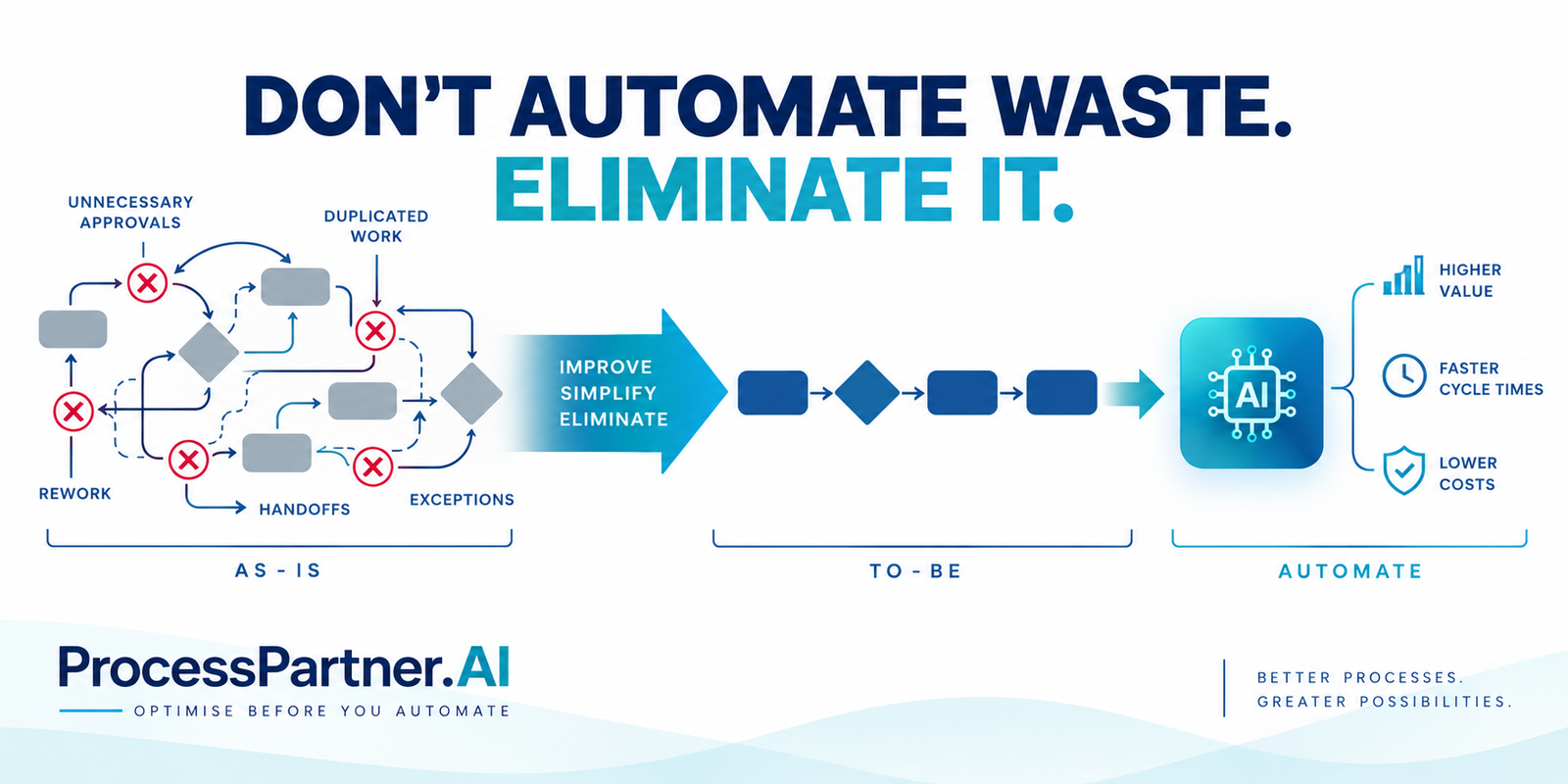
For the past few years, the pressure on leadership teams has been clear: move faster on AI and automation. Boards have approved investment. Automation programs have been established. AI pilots have multiplied. Technology budgets have grown. Now the conversation is changing. The question is no longer simply: “What are we doing with AI?” Increasingly, it […]
ProcessPartner.AI Now Available in the Microsoft Marketplace
Microsoft customers worldwide can now discover, procure, and deploy ProcessPartner.AI through Microsoft Marketplace, bringing disciplined, AI-guided process optimization into a trusted enterprise purchasing channel. SYDNEY, Australia — September 29, 2026 — ProcessPartner.AI today announced the availability of its ProcessPartner.AI – Enterprise Process Improvement Platform offer in the Microsoft Marketplace, the unified online destination for customers […]
Posted in
Posted in
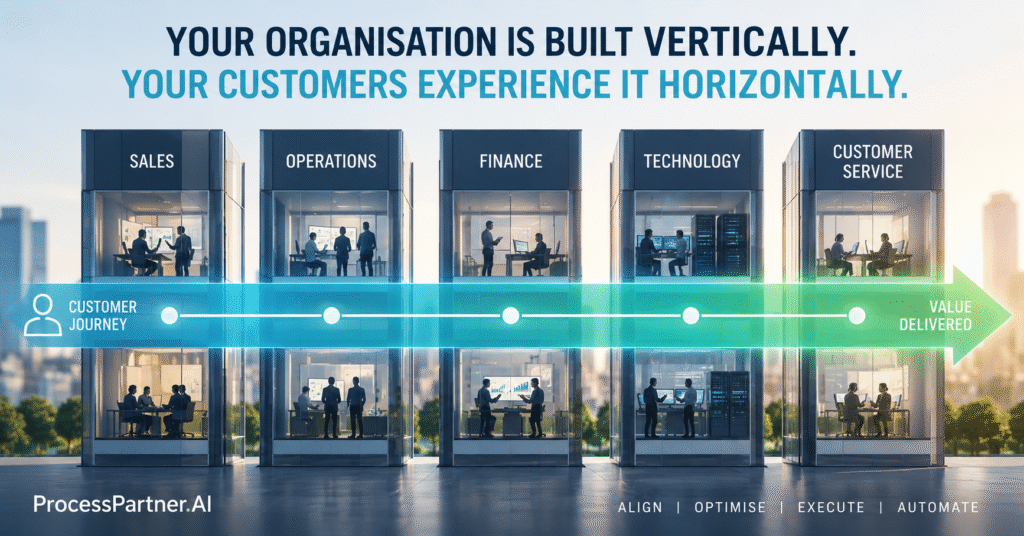
Your Organisation Is Built Vertically. Your Customers Experience It Horizontally.
Most organisations are built vertically. Sales.Operations.Finance.Technology.Customer Service. Each function has its own leadership, priorities, systems and performance measures. It makes sense from an organisational perspective. But customers do not experience organisations vertically. Their experience moves horizontally, across every one of those boundaries. A customer request might begin with Sales, move through Operations, require approval from […]
How to Create Capacity for Innovation
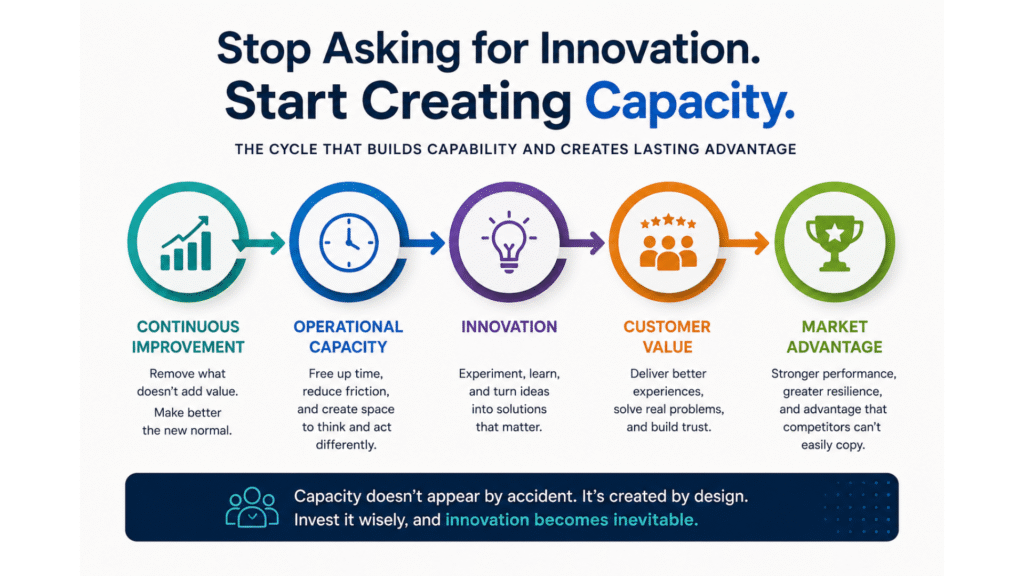
A Practical Framework for Building Innovation Through Operational Excellence Innovation has become one of the most overused words in business. Every organisation wants more of it. Leaders encourage teams to think differently. Innovation workshops are scheduled. Suggestion boxes are launched. Cross-functional brainstorming sessions are held. Yet many organisations struggle to convert good ideas into meaningful […]
Posted in
Posted in
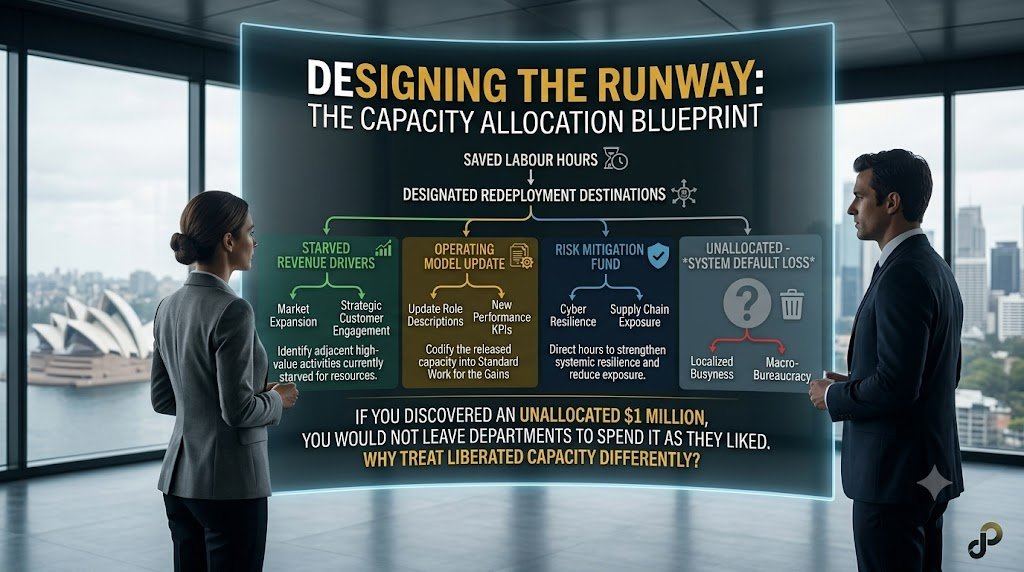
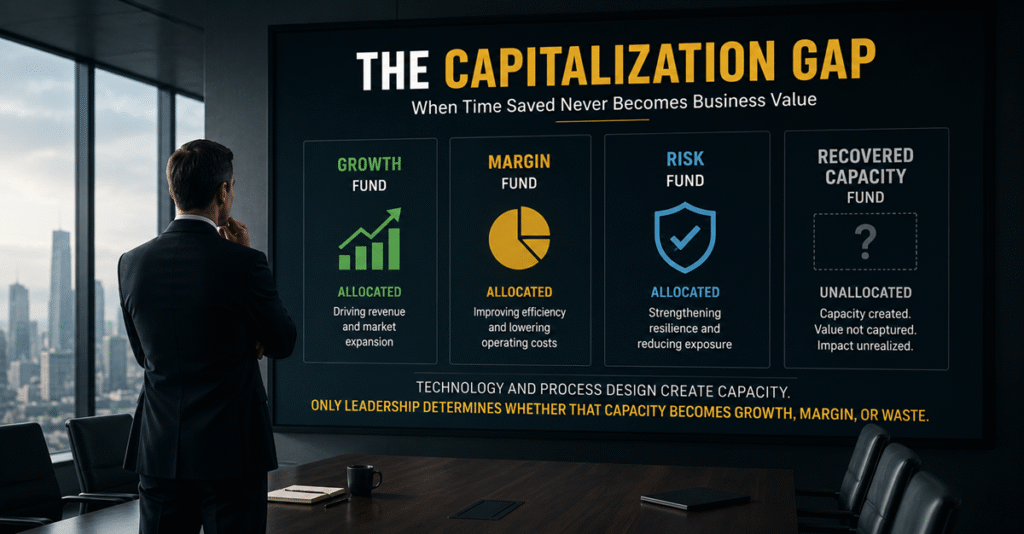
Designing the Runway: How to Stop Liberated Time from Becoming Corporate Waste
When an enterprise deploys AI or optimizes a core operational process, the initial metrics look stellar. We routinely see reports of 20% to 30% time savings on specific administrative tasks. But if leadership doesn’t explicitly build a runway for that saved time to land on, the organization’s operating model will simply find a new way […]
Posted in
Posted in
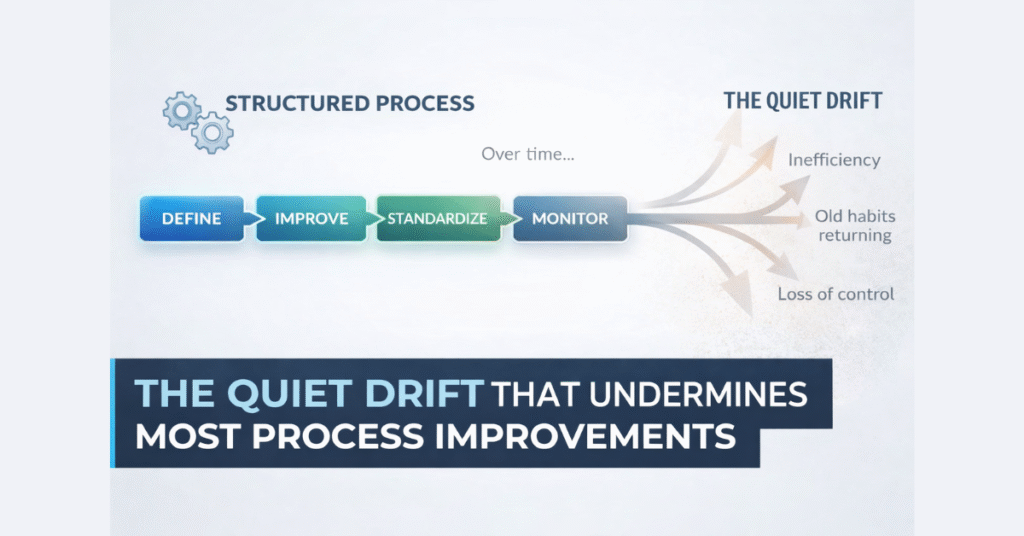
The Capitalization Gap: Why Time Saved Rarely Becomes Business Value
Every organisation wants to be more efficient. We map workflows, eliminate redundant steps, run automation workshops, and deploy AI tools. We celebrate when a team reduces the time required to complete a core administrative task by 20%. The project is marked green on the transformation dashboard. But when leadership reviews the financial results a quarter […]
Posted in
Posted in
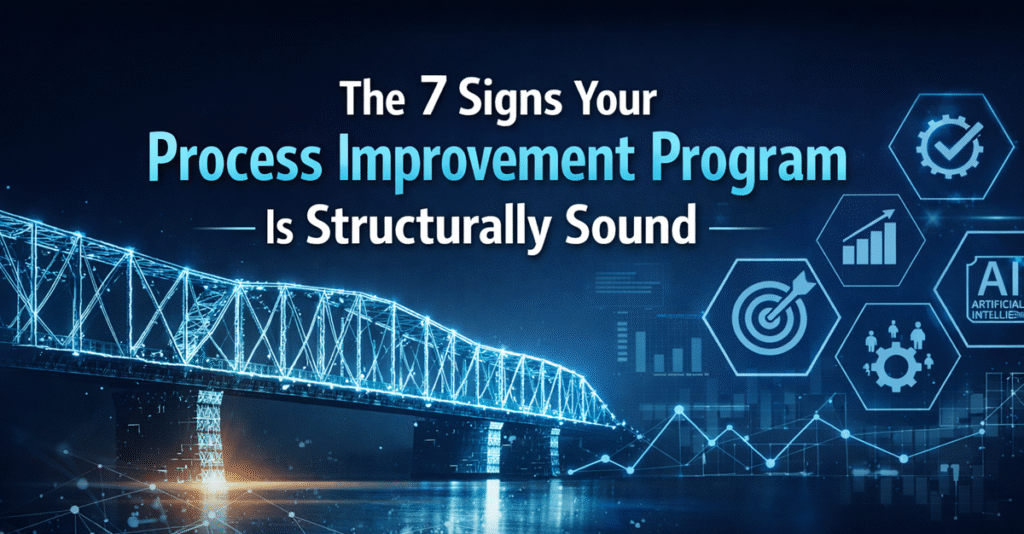
The Quiet Drift That Undermines Most Process Improvements
In a recent article, I explored the signs of a structurally sound process improvement program.But even strong programs can weaken over time. Many process improvement initiatives begin with real momentum. Teams invest time mapping processes.Workshops uncover inefficiencies.New controls are introduced.Performance improves. For a while, the results are visible. Delays shrink.Errors reduce.Teams feel the difference. Then […]
Posted in
Posted in
The 7 Signs Your Process Improvement Program Is Structurally Sound
Most organisations believe they are “doing” process improvement. Projects are running.Workshops are happening.Dashboards are updating.Automation initiatives are underway. Activity is visible. But structural integrity? That’s a different question. Over the past decade, I’ve observed a consistent pattern:Process improvement programs rarely fail because of effort. They fail because they lack structural discipline. If you want to […]

Posted in
Posted in
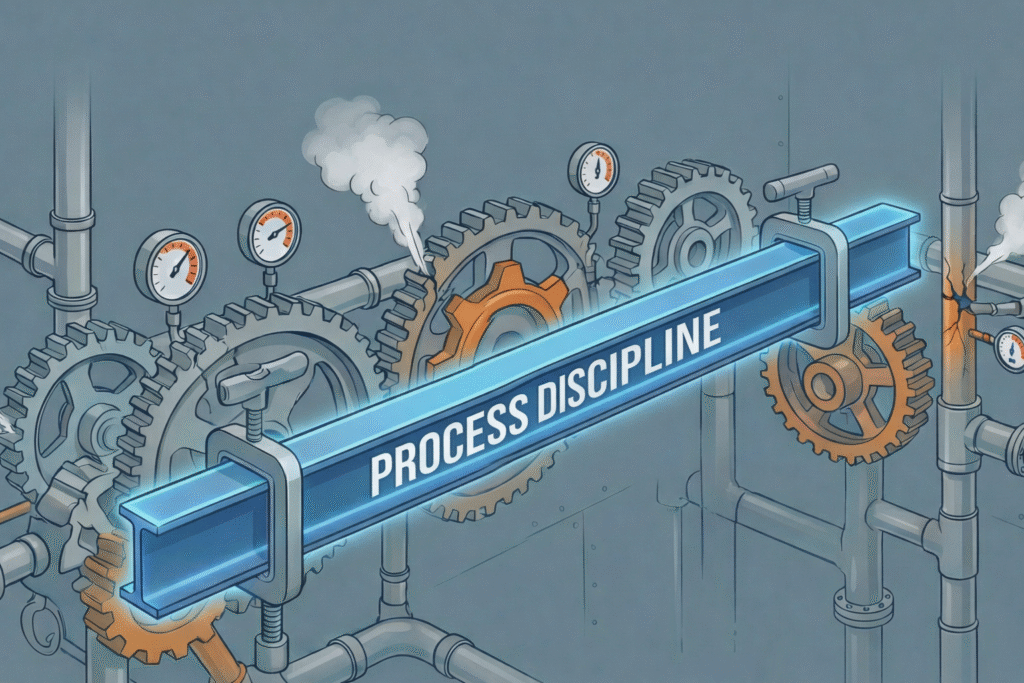
Process Design Under Pressure: What the Emergency Department Taught Us
Emergency Departments are not broken because people don’t care. They are some of the most committed, skilled, and resilient environments you’ll find anywhere. Yet they are also places where delays, congestion, and stress are highly visible, often despite extraordinary individual effort. That’s precisely why Emergency Departments are such a powerful lens for understanding process design […]
Posted in
Posted in
Process Under Pressure: What Holds Systems Together When It Matters Most
Most organisations only truly understand their processes when those processes are under stress. In calm conditions, workarounds are invisible.Delays are tolerated.Manual steps are absorbed quietly by capable people doing their best. But when in pressure rises, demand spikes, resources tighten, consequences become immediate and weaknesses surface fast. Few environments illustrate this more clearly than an […]